

July 9, 2026
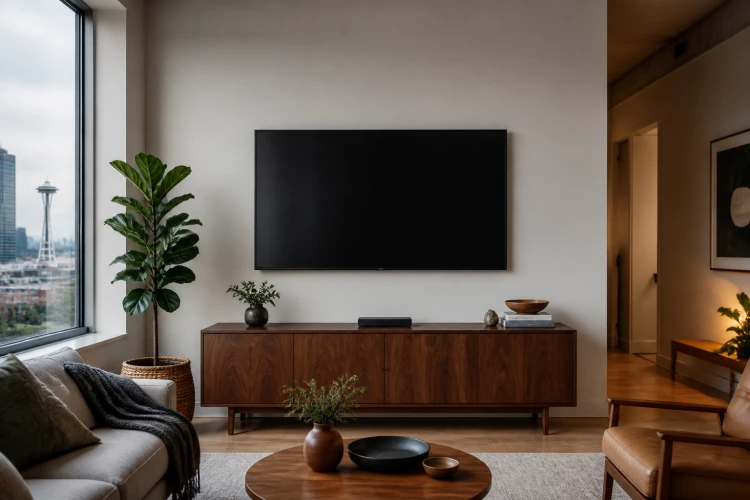
A clean TV mount can make a Seattle living room feel finished overnight. A rushed mount leaves a crooked screen, weak anchors, or a nest of cables. A little planning before the drill comes out makes the difference.
These tips are for typical drywall-and-stud walls in Seattle and Eastside homes. If you have plaster, brick, or a fireplace surround, say so up front — the hardware changes.
Start with viewing height
Sit where you actually watch. The center of the screen should land near comfortable eye level for that seat, not arbitrarily high on the wall. Fireplace mounts need extra thought because height and heat both matter. Bring a photo of the sofa and wall when you request TV mounting.
Confirm the wall and the weight
Studs are ideal. Hollow drywall alone is not enough for most modern TVs. Concrete, brick, and plaster need different anchors. Share the TV size and wall photos so the right approach is planned first.
Choose the mount type on purpose
Fixed mounts sit close to the wall and look clean. Tilting mounts help when the screen sits a bit high. Full-motion arms are useful in angled rooms, and they put more stress on the wall, so installation quality matters more, not less.
Plan cord care before install day
Decide whether you want a simple exterior raceway, furniture concealment, or a more advanced in-wall plan. Some electrical work requires a licensed electrician. A good handyman team will tell you what is practical for your setup instead of promising a hidden-wire look that your wall cannot support.
Old mounts leave holes
If you are replacing a previous mount, budget time to patch the old holes so the wall is not a grid of empty openings. Let compound cure, sand the feathered edges, and prime before you paint.
Protect the room
Mounting should not leave scuffed floors or dusty furniture. Ask for careful setup and a clean finish. That is the standard Aloha Home Services brings to every visit. Send your TV model and a wall photo when you get an estimate.
